
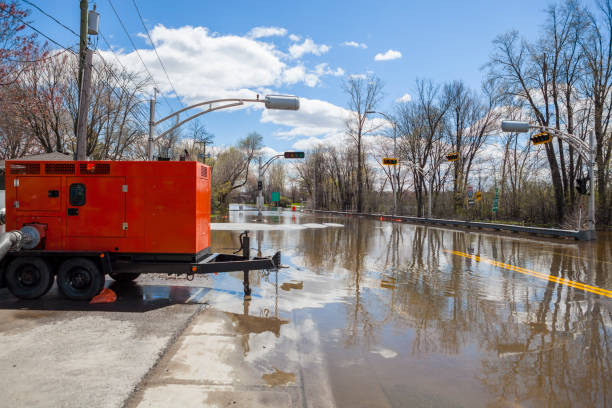
When FEMA appears in the news, the coverage almost always centers on emergency response. Cameras capture search and rescue efforts, temporary shelters, and the rapid mobilization that follows a declared disaster. That work is essential and highly visible, and it understandably commands public attention.
What receives far less attention is what happens after the initial, emergency response phase subsides.
FEMA’s mission extends beyond response into recovery, which includes two primary programs: Individual Assistance, designed to support households directly impacted by disaster, and Public Assistance, which provides reimbursement to state and local governments for eligible recovery costs. While Individual Assistance often draws sympathy and visibility, Public Assistance operates largely outside the public eye. Yet it is the program that determines whether roads are rebuilt, schools are repaired, and critical utility systems are restored.
Today, as FEMA Response remains the focus of national conversation, the Public Assistance side of the agency is moving more slowly and under greater strain. For cities, counties, school districts, and utility districts that depend on timely reimbursement to stabilize budgets and restore infrastructure, that shift is significant.
Understanding the Role of Public Assistance
Public Assistance is not a discretionary program. It is a structured federal reimbursement mechanism intended to support the repair and replacement of public infrastructure following a declared disaster. Eligible work can include debris removal, emergency protective measures, permanent repairs to public facilities, and hazard mitigation resiliency measures tied to disaster-related damage.
For many communities, Public Assistance funding represents the only realistic pathway to restoring large-scale public systems after a major event. Roads, bridges, stormwater systems, water and wastewater infrastructure, and other core public assets are not always insurable through traditional markets. In many cases, no viable commercial insurance product exists for those assets at meaningful scale.
Even where insurance is technically available for certain public buildings or facilities, premiums can be extraordinarily high. Fully insuring broad portfolios of public assets at replacement value would require tax increases that many communities cannot sustain. As a result, FEMA Public Assistance serves as a federally designed supplement to local risk management strategies, not a substitute for them.
The notion that public entities shift responsibility from insurance to FEMA oversimplifies a far more complex reality. Public Assistance exists precisely because much of the infrastructure that supports daily American life cannot be insured in a practical or affordable way.
What Is Changing Within FEMA Public Assistance
Across the country, many applicants are experiencing longer project formulation timelines, increased documentation scrutiny, and delays in the obligation of funds. Staffing constraints and evolving policy interpretation have added additional layers of complexity to an already technical program.
For example, in recent months an additional procedural requirement has further slowed the pace of obligations and reimbursements. Under updated internal review protocols, any FEMA Public Assistance obligation exceeding $100,000 now requires review and sign-off by Secretary Noem of the Department of Homeland Security before funds are formally obligated. While intended to increase oversight and accountability, the practical effect has been the creation of a growing backlog of projects awaiting approval at the federal level.
For large-scale public infrastructure projects, which routinely exceed that threshold, this additional review layer introduces extended wait times that are outside the control of state and local applicants. Projects that have already moved through standard eligibility review may sit pending final authorization for months, delaying the flow of federal reimbursement.
Public Assistance has always required disciplined documentation and careful alignment with federal policy. That is not new. What is changing is the pace at which projects move through the system and the number of review layers involved before funds are finally obligated.
For local governments operating under balanced budget requirements, extended reimbursement timelines create tangible financial pressure. Costs associated with debris removal, emergency measures, and permanent repairs are often advanced locally with the expectation of federal reimbursement. When that reimbursement slows, the burden remains on the community.
The Impact on Cities, Counties, Schools, and Utilities
The strain is not theoretical.
Cities must maintain transportation networks and public facilities while carrying recovery costs longer than anticipated. Counties continue delivering essential services while navigating extended administrative processes. School districts work to restore safe learning environments while balancing operational budgets. Utility districts repair critical systems that residents rely on every day, often without certainty about when federal funds will be obligated.
In each case, leadership teams are forced to make difficult financial decisions while awaiting reimbursement. Capital improvements may be deferred. Reserves may be drawn down. Other planned initiatives may be paused to preserve liquidity.
The public may not see these internal pressures, but they shape long-term fiscal stability and infrastructure resilience.
Why Structure Matters More Than Ever
In an environment where Public Assistance timelines are extending and scrutiny is increasing, passive waiting is not a strategy. The agencies that navigate this landscape most successfully are those that maintain disciplined internal processes from the outset.
Clear damage descriptions, well-supported cost estimates, coordinated communication between finance and operations, and organized project files reduce the likelihood of delays or funding clawbacks. Early validation of scope against FEMA policy can prevent months of back-and-forth clarification later. Ongoing internal oversight helps ensure that compliance requirements are met before issues escalate.
Recovery is not simply a facilities function or an accounting exercise. It is a coordinated operational and financial strategy that requires alignment across all departments and stakeholders.
Looking Beyond the Headlines
FEMA Response will always command attention because it addresses immediate human need. FEMA Recovery, and specifically Public Assistance, determines whether communities can fully restore the systems that support daily life.
While national attention focuses on response operations, local governments are carrying the longer-term financial responsibility of rebuilding infrastructure. When Public Assistance slows, the commitment to maintain services does not.
Communities still need functioning roads, safe schools, and reliable utilities. Those responsibilities do not pause while federal processes work through backlog or policy shifts.
For cities, counties, school districts, and utility districts, clarity and structure within the Public Assistance process are not administrative luxuries. They are financial safeguards.
At DRS, we work alongside public entities to navigate FEMA Public Assistance with precision, align documentation with eligibility requirements, and maintain disciplined recovery momentum. In a time when the headlines focus elsewhere, that steady, structured approach can make the difference between prolonged strain and stabilized recovery.