
When business leaders think about disaster exposure, they tend to focus on catastrophic events. A major hurricane. A wildfire. A large-scale flood. These events are dramatic, disruptive, and often tied to significant insurance claims.
But for many commercial organizations, the events that quietly erode profitability are not the catastrophic ones.
They are the recurring, moderate losses that fall below the deductible.
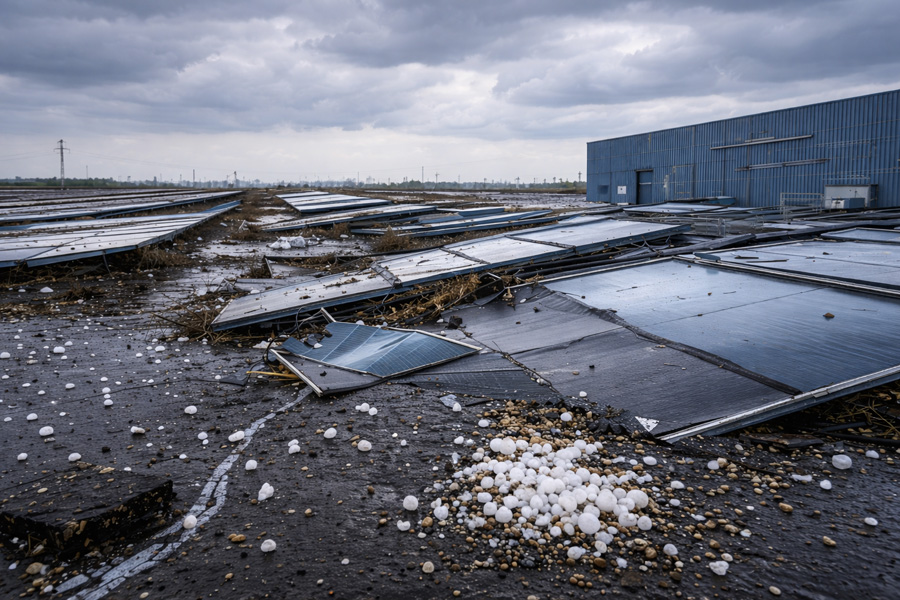
- Hail damage to multiple facilities.
- Localized flooding that disrupts operations for several days.
- Freeze events that damage piping and mechanical systems.
- Wind-driven rain that compromises roofing systems across a portfolio.
These secondary perils may not make national headlines. Yet over time, they can have a meaningful impact on cash flow, operational continuity, and margin performance.
The Deductible Reality
Over the past several years, commercial insurance programs have shifted. Deductibles have increased. Self-insured retentions have expanded. Carriers have tightened underwriting standards, particularly in catastrophe-prone regions.
For many organizations, this means a greater portion of loss is retained internally.
A hail event that damages multiple roofs may not exceed a high deductible. A localized flood may trigger repair costs that sit just below the retention threshold. A freeze event across several properties may generate scattered losses that never aggregate into a claim.
On paper, these events are labeled as “below deductible.” In practice, they are fully funded by the company.
The absence of insurance recovery does not mean the impact is minor. It simply means the cost is absorbed directly through operating cash.
The Compounding Financial Effect
Secondary peril events rarely occur in isolation. They tend to cluster by season or geography, and they often repeat across multi-location portfolios.
A company operating in Texas may experience hail damage in the spring, a freeze event in the winter, and wind-related damage during storm season. Each event may be manageable individually. Together, they can create an unplanned line item that was never built into the annual budget.
The financial impact extends beyond repair invoices.
Operational disruption can delay production.
Tenant space may be temporarily unusable.
Customer access may be restricted.
Supply chain continuity may be interrupted.
Even short-term disruption can affect revenue recognition, delivery schedules, and customer relationships. For organizations operating on tight margins, a series of “manageable” events can materially influence quarterly performance.
Cash Flow and Timing Pressure
Because these events often fall below deductible thresholds, recovery is not paced by an insurance claim process. Repairs typically move forward immediately, funded directly by company cash.
For capital-intensive businesses or organizations managing multiple properties, that can create timing pressure. Funds allocated for growth initiatives or planned improvements may be redirected to reactive repairs. Working capital may be compressed at precisely the time leadership is attempting to maintain operational stability.
Unlike large insured losses, which may involve formal claims adjustment and structured reimbursement, below-deductible events require rapid internal decision-making. That speed can be necessary operationally, but it can also lead to inconsistent documentation, scope gaps, or vendor pricing variability.
Over time, those inefficiencies add cost.
The Operational Strain of Reactive Response
When secondary events are handled reactively, each incident becomes its own emergency.
Vendors are sourced after damage occurs.
Pricing is negotiated under time pressure.
Damage assessments vary by location.
Internal teams spend time coordinating repairs instead of focusing on core business functions.
For organizations with geographically dispersed assets, the lack of standardized response protocols can create uneven outcomes across sites. One facility may resolve issues quickly and cost-effectively, while another may experience extended downtime due to slower mobilization or scope creep.
These inconsistencies rarely appear in a single line item. They show up in lost productivity, management distraction, and margin erosion.
A More Disciplined Approach to Recurring Risk
Secondary perils are not anomalies. In many regions, they are predictable in their frequency, even if their timing cannot be precisely forecast.
Organizations that approach these events with discipline rather than improvisation tend to reduce both financial and operational volatility.
Pre-established vendor relationships with negotiated pricing frameworks can shorten mobilization time and reduce cost variability. Clear internal reporting structures allow leadership to track cumulative below-deductible losses across a portfolio rather than viewing each event in isolation. Coordinated documentation practices help to ensure that if damages approach deductible thresholds, the groundwork for a claim is already in place.
Preparedness in this context is less about anticipating a single catastrophic event and more about managing recurring exposure with consistency.
For commercial entities, that consistency protects cash flow, preserves operational focus, and supports long-term financial performance.
Looking Beyond the Catastrophe Model
Catastrophic events will always warrant strategic planning and insurance structuring. They are high-severity, low-frequency risks that demand executive attention.
Secondary perils represent a different category of risk. They are moderate in severity but high in frequency. Over time, their cumulative effect can rival or exceed the impact of a single large loss.
For businesses, particularly those operating across multiple locations or facilities, understanding this pattern is critical to maintaining predictable earnings and protecting enterprise value.
At DRS, we work with commercial clients to bring structure to post-loss processes of all sizes, align operational response with insurance program realities, and reduce the variability that recurring events introduce into financial performance. In a market defined by higher deductibles and tighter margins, disciplined management of secondary perils is not simply operational prudence. It is sound business strategy.