
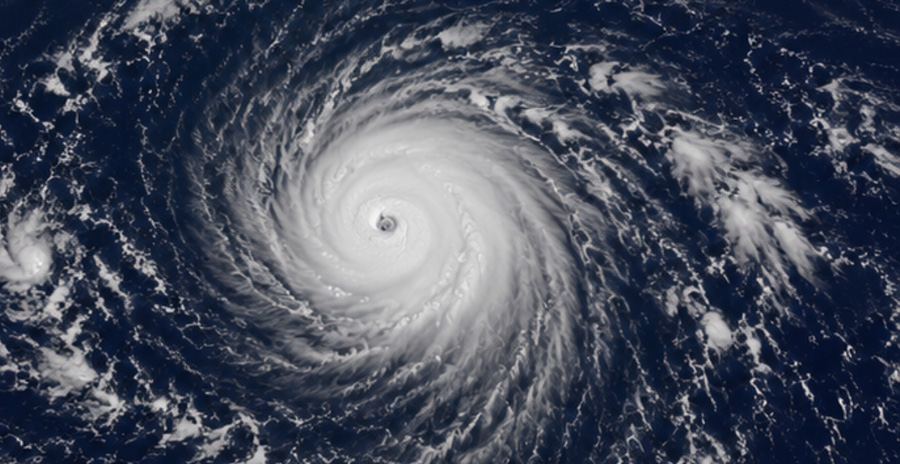
In 2024, Hurricanes Helene and Milton caused more than $100 billion in combined economic losses across the southeastern United States, and many of the commercial property owners and public entities in their path found recovery taking far longer than the storm damage alone warranted, because the documentation, vendor relationships, and insurance review work that carriers require simply hadn’t been completed before either storm arrived.
That pattern repeats after every major hurricane, and it is entirely preventable. What separates organizations that recover quickly and completely from those that spend years in disputes with adjusters isn’t the size of the storm or even the quality of their insurance program on paper, it’s whether they built the evidentiary foundation before impact. With hurricane season officially underway as of June 1, organizations in hurricane-prone regions still have time to close those gaps before a named storm forces the issue.
What “Prepared” Actually Looks Like
Preparation isn’t an emergency binder on a shelf that gets refreshed every few years. It’s a living documentation system, a set of verified vendor relationships, and an insurance policy that someone with authority has actually read end to end in the past 12 months. The organizations that recover most completely are the ones that built the evidentiary foundation carriers run on before they ever needed it.
Documentation
- Pre-event asset inventory. Photograph, geo-tag, and timestamp every major asset, including HVAC systems, roofing, electrical panels, parking structures, and specialized equipment. Carriers require clear evidence of pre-storm condition to approve claims, and “we had it before the storm” is not documentation.
- Statement of Values accuracy check. Confirm your current property schedule reflects accurate replacement cost values, not what the building was worth five years ago. Outdated schedules are one of the most common reasons commercial property claims are undervalued at adjustment, and correcting them after a loss is nearly impossible.
- Maintenance and inspection records. Document that your property was maintained to code and on schedule. Deferred maintenance is a standard carrier defense for denying or reducing claims, and it’s avoidable with a basic records system in place before the event.
- Financial records organized by cost center. When a claim goes into dispute, carriers will ask you to demonstrate that disaster-related costs are separable from normal operating expenses. Organizations whose accounting structure already supports that separation move through the claims process significantly faster than those trying to reconstruct it under pressure after a loss.
Vendor Relationships
- Pre-qualify contractors now. After a named storm, demand for licensed restoration, debris removal, and water mitigation contractors spikes immediately and pricing follows. Organizations with pre-established vendor agreements avoid both the scramble and the inflated rates that come with post-storm demand.
- Lock in pricing terms before storm season. Contractor rates spike sharply after a named storm because demand far outpaces supply across the affected region. Organizations that negotiate and document pre-event pricing for debris removal, temporary repairs, and restoration work are in a significantly stronger position on both response speed and cost defensibility when those expenditures go into a claim.
- Build a written escalation path. Who calls whom in the first 24 hours? If that decision tree doesn’t exist in writing today, it will not be executed well when it matters.
Insurance Policy Review
- Know your TIV and what it means for your named storm deductible. Most hurricane deductibles are calculated as a percentage of TIV (Total Insured Value) rather than a flat dollar amount, and the gap between what organizations expect to pay and what they actually owe at the time of a loss can be significant. On a portfolio with $20 million in TIV, a 2 to 5 percent hurricane deductible means $400,000 to $1 million comes out of pocket before coverage applies. If your TIV hasn’t been reviewed recently, that calculation is likely off, and an inaccurate TIV creates problems on both sides of a claim.
- Understand your business interruption trigger. Does your policy require physical damage to your specific building, or does it also cover contingent business interruption if a key supplier or utility provider is affected? The difference between those two positions can represent months of lost revenue.
- Confirm ordinance and law coverage. If a storm-damaged building requires code upgrades before it can be repaired, that additional cost is covered only if the right endorsement is in place, and code requirements in many jurisdictions have changed significantly over the past decade.
Common Mistakes That Limit Recovery
Even well-prepared organizations leave significant money on the table because of avoidable errors, and most share the same root cause: they treated recovery steps as post-event problems instead of pre-event decisions.
- Failing to segregate storm-related costs in real time. Mixing emergency response costs with routine operating expenses creates a documentation problem that is very difficult to unwind during the claims process. The time to build that separation into your accounting workflow is before the event.
- Accepting the first adjuster estimate without independent review. Carrier adjusters are not adversaries, but initial estimates are frequently incomplete, particularly for complex commercial losses with business interruption or ordinance and law components. An independent review consistently identifies additional covered losses that the initial estimate missed.
- Waiting to engage forensic accounting support. The further you get from an event, the harder it becomes to reconstruct the financial impact in a format that satisfies carrier documentation requirements. Organizations that engage forensic accounting expertise in the first 30 days recover more than those that treat it as a later-stage need.
- Failing to capture emergency response expenditures as they happen. Temporary board-up, generator rental, security, debris hauling, and emergency roof tarping are all potentially covered costs, but they frequently get absorbed into operations during the chaos of a storm response and never make it into a claim. Assigning someone specifically to track and document those expenditures in real time, with receipts and vendor invoices organized from day one, is one of the simplest ways to protect your recovery.
How Preparation Connects Directly to Recovery
Every item on the preparation checklist above corresponds to a specific requirement in the claims process. Your pre-event photography establishes proof of condition. Your TIV accuracy sets your coverage ceiling and your deductible calculation. Your vendor agreements determine both your response speed and your cost defensibility when those expenditures go into a claim. Your financial record architecture determines how quickly and cleanly you can separate storm-related costs from normal operating expenses under adjuster scrutiny.
The preparation work and the recovery work aren’t two separate phases where one ends and the other begins after a storm. They’re the same work done at two different points in time, and organizations that recognize that before hurricane season starts are consistently better positioned on recovery timelines and settlement amounts.
A Note on Vendor Partnerships
One of the highest-leverage decisions an organization can make before hurricane season is establishing a pre-qualified vendor network, and it’s one of the most consistently overlooked steps we see, even in organizations that are otherwise well-prepared.
DRS’s Managed Vendor Partner (MVP) program was designed specifically to address this gap, and enrollment is free. When an organization joins MVP, we assign them a dedicated network of pre-qualified, licensed, and insured restoration and specialty contractors, so there’s no scramble to find vetted vendors after a storm depletes the market. We also monitor the property locations on each member’s schedule of values against incoming weather events and send email notifications when a potential impact is approaching, which gives members lead time to prepare while there’s still time to act rather than reacting after a storm has already made landfall. When impact does occur, assigned vendors are ready to mobilize at pre-negotiated rates, with the contract documentation and cost substantiation trails that carriers require already in place.
What to Do Before June 15
Three steps will move the needle most before storm season gets fully underway:
- Pull your Statement of Values and compare it against your current asset inventory. If there’s a gap between what’s on paper and what’s actually on-site, flag it to your broker before the first named storm of the season forms.
- Review your named storm deductible and business interruption trigger language with your risk manager and, if you haven’t recently, with an independent insurance recovery consultant who can read the policy without the carrier’s interests in mind.
- Pre-qualify at least two vendors for debris removal, temporary repairs, and water mitigation in your primary risk geography, and get their certificates of insurance on file today.
The team at DRS Consults works with commercial property owners and public entities across hurricane-prone and disaster-affected regions year-round. If you want to get ahead of this season before a storm is already in the forecast, enrolling in the MVP program is a practical first step, and it costs nothing to do it. Your vendors are assigned, your property locations go on our monitoring list, and you’ll receive weather impact notifications before conditions deteriorate, which is exactly when preparation still matters.
Sign up for the MVP program at drsconsults.com.